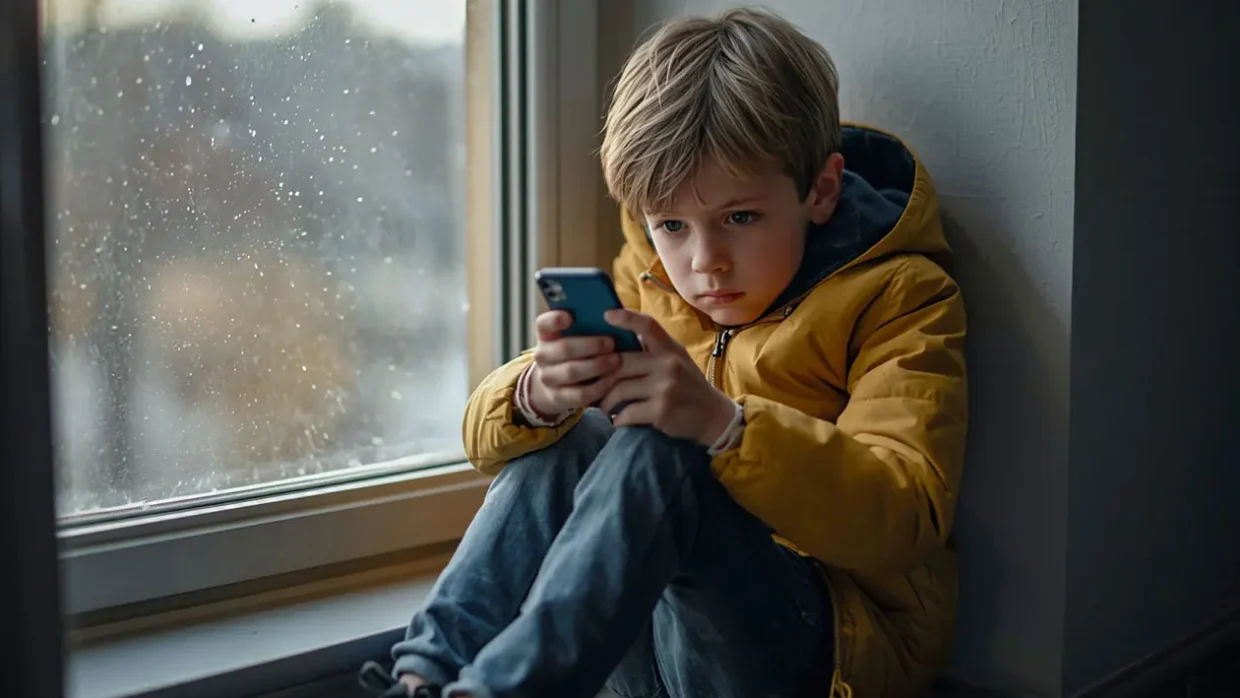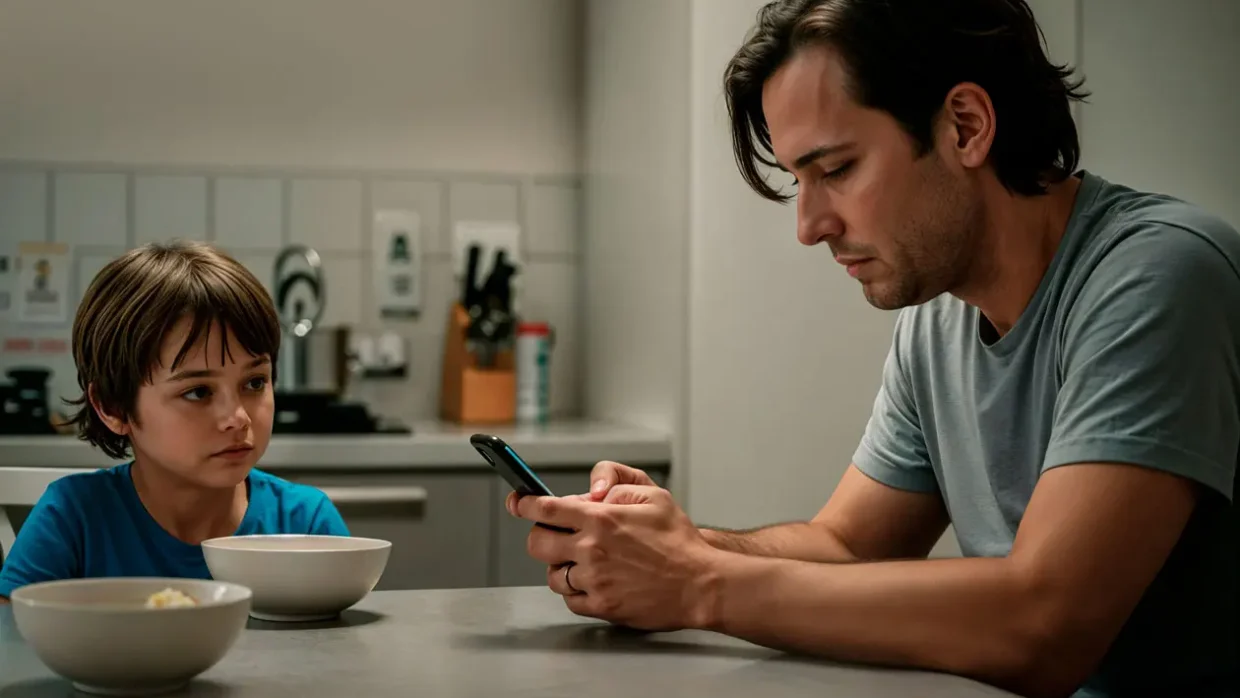



Look, we get it. Parenting in the digital age feels like navigating uncharted waters without a compass. Just when we think we’ve figured out one app, three more pop up that our kids are already experts on. Here’s the thing, we can’t bubble-wrap our children from online dangers forever, but we can arm ourselves with knowledge about the real online dangers lurking in the digital world.
We’ve spent countless hours researching, reviewing credible sources, and yes, learning from real experiences along the way. Today, we’re sharing what we’ve learned about the online dangers that keep us up at night, and, more importantly, what we can actually do about them.
1. Cyberbullying: One of the Most Common Online Dangers Kids Face
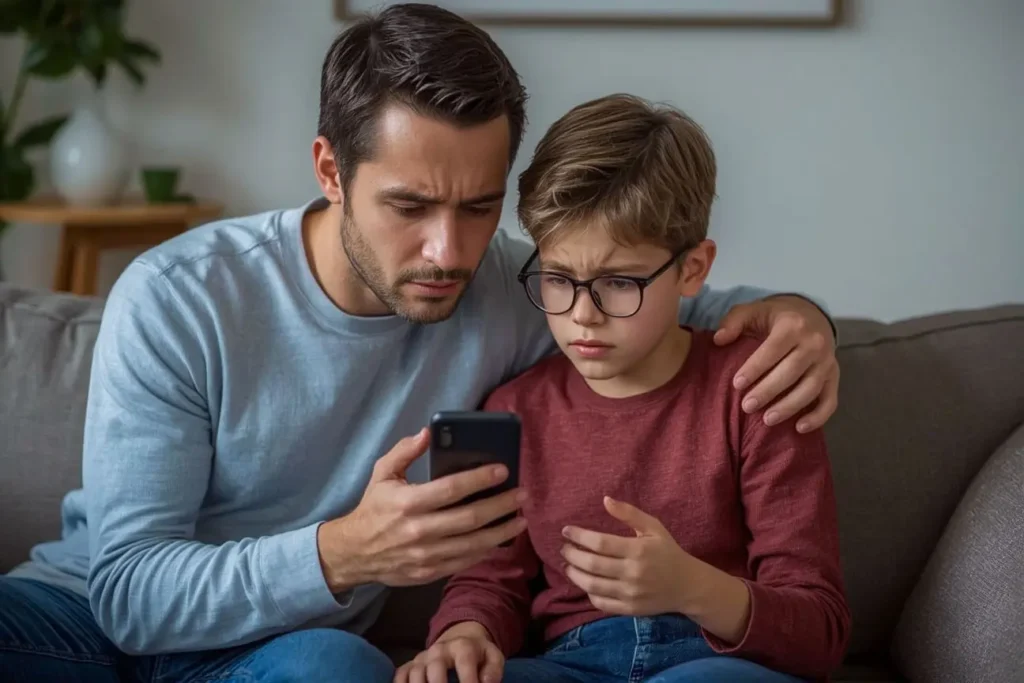
Remember when bullying stopped at the school gates? Yeah, those days are long gone. Cyberbullying is relentless. It happens 24/7, reaching kids through their phones, gaming consoles, and social media accounts.
According to StopBullying.gov, open communication and early intervention are key to helping children deal with online harassment safely.
We’ve seen firsthand how devastating this can be. The anonymity of the internet emboldens bullies, and the permanent nature of digital content means hurtful messages can be screenshot and shared endlessly. What’s particularly insidious is that many kids won’t tell us when it’s happening, they’re afraid we’ll take away their devices or make things worse.
The signs are subtle sometimes. Sudden mood changes after checking their phone. Reluctance to go to school. Withdrawing from activities they once loved. We need to create an environment where our kids feel safe talking to us about these experiences without fear of judgment or overreaction.
2. Online Predators: Dangerous Online Threats Every Parent Should Know
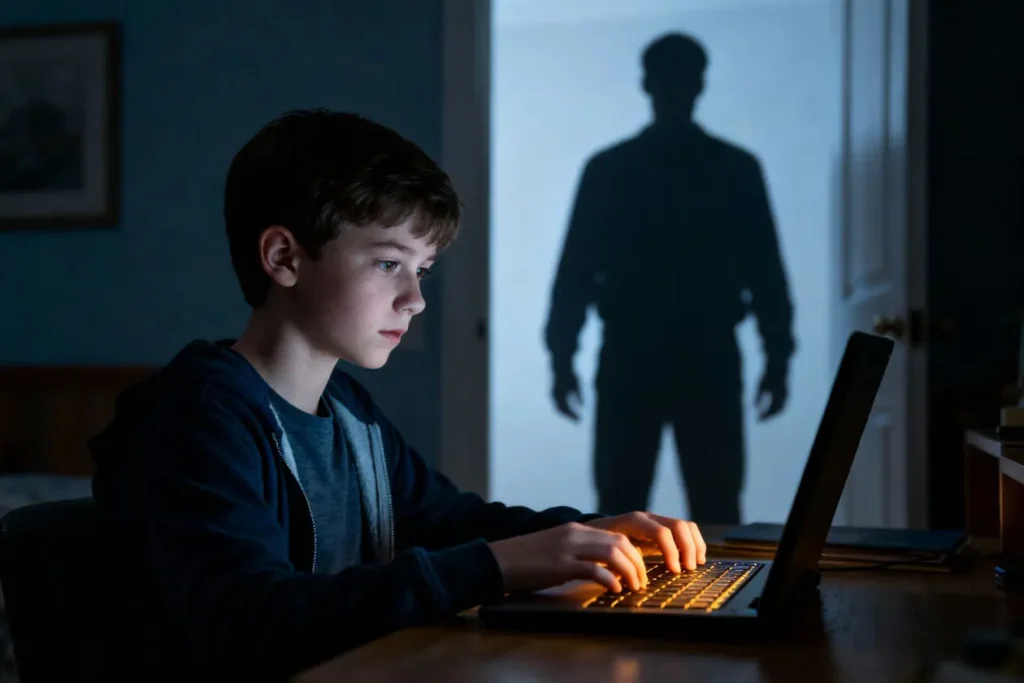
This one makes our blood run cold, and for good reason. Online predators are sophisticated. They know exactly how to build trust with children, complimenting them, understanding their problems, being the “only one who really gets them.” It’s called grooming, and it happens gradually.
These predators often pose as peers. They might claim to be a 14-year-old who loves the same video games or music. They’re patient, sometimes spending weeks or months building a relationship before making inappropriate requests. And here’s what’s terrifying: they’re not just on sketchy websites. They’re on popular gaming platforms, social media apps, and anywhere else kids gather online.
The National Center for Missing & Exploited Children provides guidance for parents on how to recognize and report online grooming behavior.
We’ve learned that open communication is our best defense here. Teaching our kids about body safety, appropriate relationships, and the warning signs of grooming, without scaring them senseless, that’s the balancing act we’re all trying to master.
3. Inappropriate Content: More Than Just “Adult” Material
Let’s face it, the internet is full of content we’d rather our kids never see. But we’re not just talking about pornography (though that’s certainly a concern). We’re talking about graphic violence, self-harm content, extreme political propaganda, and disturbing challenges that go viral.
The algorithm-driven nature of most platforms means that once a child views something inappropriate, they’re likely to be served more of the same. One click out of curiosity can lead down a rabbit hole that’s hard to escape from. And you know what? Even “kids’ YouTube” isn’t foolproof. We’ve all heard the horror stories.
What really worries us is how normalized some of this content has become. Kids might see things that would have traumatized us at their age, and they shrug it off as “just the internet.” But the psychological impact is real, whether they recognize it or not.
Among the online dangers we often overlook is how easily kids give up their privacy
The internet can be a powerful tool, but without guidance, it becomes a playground for risks.
Stephen Balkam
4. Privacy Invasion and Data Harvesting
Our kids are creating digital footprints before they can even walk. Every app they use, every quiz they take, every photo they share, it’s all data being collected, analyzed, and often sold.
We’ve noticed something unsettling: kids don’t seem to value privacy the way older generations do. They’ll share their location, their real names, their schools, even their daily schedules without a second thought. They don’t realize that information shared at 13 could come back to haunt them when they’re applying for college or jobs.
The complexity of privacy settings doesn’t help. Even we struggle to understand all the options sometimes. And let’s be honest, reading terms of service isn’t exactly riveting. But here’s what we’ve learned: if a service is free, our kids’ data is probably the product being sold.
5. Gaming Addiction and Predatory Design
We need to talk about how games are designed to be addictive. Variable reward schedules, social pressure, fear of missing out, game developers employ the same psychological tricks casinos use, but they’re targeting our children.
It starts innocently enough. A fun game to play with friends. But then come the daily login bonuses, the limited-time events, the loot boxes that are basically gambling for kids. Before we know it, our child is having meltdowns when gaming time is restricted, their grades are slipping, and real-world friendships are suffering.
We’re not anti-gaming, far from it. Games can be creative, social, and educational. But we’ve seen too many families torn apart by gaming addiction to ignore the risks.

The key is setting boundaries early and sticking to them, even when it feels like we’re the meanest parents in the world.
6. Social Media Pressure and Mental Health: A Hidden Online Danger
The correlation between social media use and declining mental health in teens isn’t just correlation anymore, research is increasingly showing causation. But here’s the catch: telling our kids to just “stay off social media” is like telling them to opt out of their entire social world.
We see our kids constantly comparing themselves to carefully curated online personas. They’re chasing likes and followers as if their self-worth depends on it, because in their world, sometimes it feels like it does. The pressure to maintain a perfect online image is exhausting, and we’re seeing anxiety and depression rates skyrocket as a result.
What breaks our hearts is seeing kids lose the ability to just be present. Every experience becomes content to be shared. Every moment is filtered through the lens of “is this Instagram-worthy?” We’re raising a generation that’s performing their lives rather than living them.
7. Sexting and Digital Reputation Damage
This is the conversation no parent wants to have, but we must. Kids are sharing intimate photos, sometimes willingly, sometimes under pressure. And once those images are out there, there’s no getting them back.
We’ve seen too many cases where a photo shared in confidence becomes ammunition for revenge or blackmail. Even when shared consensually between teens, these images can constitute child pornography under the law, with serious legal consequences that can follow our kids for life.
The impulsivity of adolescence combined with the permanence of digital content is a dangerous combination. Our kids don’t fully grasp that the person they trust today might not be trustworthy tomorrow. Or that screenshots exist. Or that nothing shared digitally is ever truly private.
8. Misinformation and Conspiracy Theories
Our kids are growing up in an era where distinguishing fact from fiction online is genuinely challenging. Deepfakes, manipulated images, and convincing conspiracy theories spread faster than fact-checkers can debunk them.
We’ve watched kids fall down conspiracy rabbit holes, emerging with worldviews that are completely detached from reality. They’re particularly vulnerable because they haven’t yet developed strong critical thinking skills, and the algorithms feed them increasingly extreme content to keep them engaged.
What’s especially concerning is how this misinformation shapes their understanding of important issues, health, politics, science, social justice. They’re forming opinions based on TikTok videos and Reddit threads rather than credible sources. Teaching media literacy has never been more crucial, yet most schools aren’t adequately addressing it.
9. Financial Scams and Identity Theft
Kids are increasingly becoming targets for financial scams. Free V-bucks, exclusive skins, “You’ve won!” pop-ups, scammers know exactly what appeals to young users. And our kids, bless them, still believe that people online are generally honest.
We’ve seen children unknowingly give away parents’ credit card information, download malware disguised as game cheats, or fall for phishing attempts that would seem obvious to us. They don’t yet understand the value of personal information or the permanence of financial damage.
Identity theft is another growing concern. Kids’ clean credit histories and unused Social Security numbers make them attractive targets. The theft might not be discovered for years, until they try to apply for student loans or their first credit card.
10. FOMO and the Always-Online Culture
Fear of missing out isn’t new, but the digital age has weaponized it. Our kids feel pressure to be constantly available, constantly responding, constantly engaged. The anxiety of an unanswered message or an unviewed story is real for them.
We see kids sleeping with their phones, waking up to check notifications, unable to focus on homework without constantly monitoring multiple social streams. It’s not just distraction, it’s a fundamental rewiring of how their brains process information and seek rewards.
The always-online culture is stealing something precious from our children: the ability to be bored, to daydream, to sit with their thoughts. Every moment of potential reflection is filled with stimulation. We’re raising kids who don’t know how to be alone with themselves, and that terrifies us.
These online dangers aren’t going away, but awareness changes everything
Moving Forward Together
Here’s what we’ve learned through all of this: we can’t protect our kids from every online danger, but we can prepare them. It starts with honest, ongoing conversations, not just one “internet safety” talk and done. We need to stay curious about their digital lives without being invasive, set reasonable boundaries without being restrictive, and most importantly, make sure they know they can come to us when something goes wrong online without fear of punishment or losing their devices.
The digital world isn’t going anywhere. Our kids will need to navigate it for the rest of their lives. Our job isn’t to shield them from it entirely but to give them the tools, knowledge, and confidence to navigate it safely. Yes, it’s overwhelming. Yes, we’ll make mistakes. But we’re all in this together, learning as we go, doing our best to raise resilient, digitally literate kids who can harness the amazing potential of the internet while avoiding its pitfalls.
Remember, we don’t have to be perfect. We just have to be present, engaged, and willing to learn alongside our children. Because at the end of the day, the most powerful protection we can offer isn’t parental control software, it’s a relationship built on trust, communication, and mutual respect.
Helpful resources
How to Talk to Your Kids About Internet Strangers
A practical guide that helps parents explain online stranger danger to their kids in a calm, age-appropriate way.
How Much Screen Time is Too Much? Age-by-Age Breakdown
A clear breakdown of healthy daily screen time limits for kids of every age, with tips to help parents create balanced routines.
Top 5 Parental Control Apps Compared (Qustodio vs. Bark vs. Norton Family…)
A clear breakdown of healthy daily screen time limits for kids of every age, with tips to help parents create balanced routines.