

If you have a child with a smartphone, you already know how quickly they discover new apps. One week it’s a harmless game, and the next it’s one of those Dangerous Apps you’ve never heard of that suddenly has your child glued to the screen for hours. We get it. Keeping up with the app landscape is genuinely hard, especially when new platforms launch every few months and kids always seem to be one step ahead.
But here’s the thing. Not every app is just a distraction. Some Dangerous Apps carry real risks: exposure to strangers, explicit content, cyberbullying, and even contact with predators. And because many of these apps are designed to look fun and innocent, parents often don’t realize there’s a problem until something goes wrong.

That’s why we’ve put together this guide. We’re not here to scare you. We’re here to give you the information you need so you can have informed conversations with your children and make confident decisions about what stays on their devices.
Let’s walk through the seven apps that have raised the most concern among child safety experts, digital wellness organizations, and parents themselves heading into 2026.
1. Wizz: The App That Connects Strangers
Wizz markets itself as a way to make new friends, and it has become especially popular among teenagers over the past couple of years. The problem is that many parents now consider it one of the more concerning Dangerous Apps because “making new friends” in this context means being matched with complete strangers based on age and interests, often with very little friction or verification.
Why It’s Risky
The app pairs users randomly and encourages them to move conversations to other messaging platforms like Snapchat or Instagram quickly. This is a classic pattern that child safety experts warn about. Once a conversation leaves the original platform, there are no content filters, no monitoring, and no way for a parent to see what’s happening.
In 2024 and 2025, Wizz was investigated in connection with sextortion cases involving minors in the United States. Multiple reports from advocacy groups like Thorn, which works to defend children from sexual abuse, flagged the app as a high-risk environment for young people.
What you can do: Search your child’s device for Wizz. If it’s there, don’t panic, but do have a direct conversation about why meeting strangers online carries risks that meeting people in person doesn’t. You can also use parental control tools to block the app at the router or device level.
2. Snapchat: Still a Hidden Danger Despite Familiarity
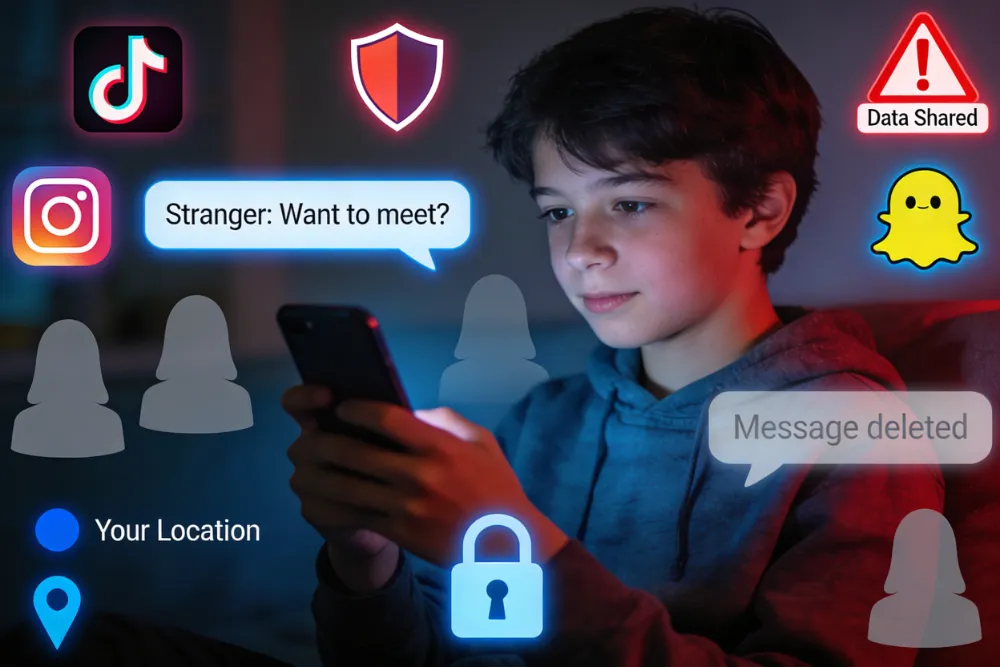
Snapchat has been around long enough that many parents assume it’s already been dealt with. But the platform continues to evolve in ways that create new risks, and the fact that it feels “normal” for teens to use today doesn’t automatically make it safe. In fact, many experts still include Snapchat on lists of Dangerous Apps because of features like disappearing messages, location sharing, and contact with strangers.
The Disappearing Content Problem
The original selling point of Snapchat was that photos and messages disappear after being viewed. That sounds reassuring. In practice, it means children often share content they would never send through a permanent channel because they think it just vanishes. Screenshots can still be taken, and third-party apps exist specifically to save Snapchat content without the sender knowing.
Snap Map and Location Sharing
Snap Map allows users to share their real-time location with others. If your child has this enabled and their friends list includes people they don’t know well in real life, their location is potentially visible to strangers. This is a feature many kids turn on without fully understanding the implications.
Drug Sales Through Snapchat
This is one that has devastated families in recent years. Law enforcement agencies across the US have documented cases where drug dealers use Snapchat to reach teenagers directly, often selling counterfeit pills laced with fentanyl. Because messages disappear, the platform became a preferred channel for these transactions. Organizations like the DEA have issued direct warnings to parents about this specific threat.
What you can do: Sit down with your child and review their Snapchat privacy settings together. Make sure Snap Map is set to Ghost Mode, their account is private, and they only have people they personally know on their friends list.
Watch: How Dangerous Apps and Data Brokers Track Kids Online
Before we dive into the list, this DW documentary gives a powerful look at how modern apps collect personal data, influence behavior, and expose users especially teenagers to online risks many parents never see coming.
3. Discord: A Gaming Hub With Serious Blind Spots
Discord started as a communication platform for gamers, and it’s genuinely useful for that purpose. The issue is that many parents now consider it one of the more concerning Dangerous Apps because it’s also filled with unmoderated communities, private servers, and direct messaging features that make it very difficult to know what children may be exposed to online.
What Parents Often Miss
Discord servers can be created by anyone and set to private. Your child might be a member of dozens of servers that you’ve never heard of. Content in these servers can range from completely innocent gaming chat to explicit material, radicalization rhetoric, and contact from adults with harmful intentions.
The platform’s terms of service require users to be 13 or older, and certain content channels are age-restricted to 18 plus. But there is no meaningful age verification. A child who says they are 18 is treated as 18.
Direct Messaging Risks
Discord’s direct messaging feature allows anyone to contact your child if they share a server. This is how a large number of grooming cases connected to the platform have unfolded. A child joins a gaming server, starts chatting publicly, and then an adult moves the conversation to DMs.
What you can do: Ask your child to show you the servers they’re in. You can also go into Discord’s settings and disable direct messages from server members, which removes one of the biggest vectors for unwanted contact.
4. Yubo: Designed Like a Social Network, Functions Like a Dating App
Yubo is often described as “Tinder for teens,” and while that framing is a little reductive, it does capture the core concern. The app allows users to swipe through profiles of other young people nearby, join live streams, and chat. Because of these features, many parents and safety experts now place Yubo among the most discussed Dangerous Apps for teenagers. The age range is officially 13 to 17, with a separate section for adults 18 and older.
The Problems in Practice
The separation between the teen and adult sections on Yubo has proven to be unreliable. Investigations by journalists and child safety organizations have found adults easily accessing content from and interacting with teenagers on the platform. The live streaming feature, in particular, has been flagged multiple times for hosting inappropriate content, which is one reason Yubo is often discussed among today’s most concerning Dangerous Apps.
Yubo also has a built-in social pressure dynamic. Users can “like” profiles, and that feedback loop encourages children to present themselves in ways that attract more attention online. Over time, this can increase risky image-sharing behavior and expose teens to unwanted interactions.
What you can do: This is one of the apps we’d strongly recommend removing from a younger teenager’s device entirely. For older teens, have a direct conversation about what makes Yubo different from apps like Instagram or TikTok and why those differences matter for online safety.
5. Omegle Successors: The Video Chat Stranger Danger Problem Continues
Omegle, the notorious “talk to strangers” video chat platform, shut down in 2023 after years of controversy and a landmark legal case. But the gap it left has been filled by a wave of copycat apps and platforms that work in almost the exact same way, pairing users randomly for video chats with little to no verification or meaningful moderation. Because of this, many experts continue to classify these platforms among the most risky Dangerous Apps for children and teenagers online.
The Apps Filling That Gap in 2026
Platforms like Emerald Chat, Chatroulette (which has been around for years), and several newer apps operate on the same model. Users are paired randomly. There is no age verification. Explicit content from adult users is common. And children continue to access these platforms out of curiosity, often not knowing what they’re getting into.
The fundamental design of these platforms creates risk by default. There is no way to make random anonymous video chat with strangers safe for minors. The structure of the experience is the danger.
What you can do: Talk to your child specifically about the category of app, not just individual app names. Explain that any platform designed to connect users with random strangers through video chat can carry serious risks, regardless of what it’s called. Many of these platforms quickly become part of the growing list of Dangerous Apps because the names may change, but the underlying dangers often stay the same.
6. Roblox: Real Risks Inside a Children’s Platform
Roblox is not inherently one of the typical Dangerous Apps parents worry about. Platforms like Common Sense Media also provide detailed reviews to help families better understand app risks and age appropriateness. Hundreds of millions of children play Roblox, and many of the games on the platform are genuinely fun and creative.
We include it here not to alarm parents, but because the risks inside Roblox are often underestimated precisely because it looks and feels like a safe children’s game. Features like in-game chat, user-generated content, and interactions with strangers can still create online safety concerns if parental controls are not properly configured.
In-Game Chat and Social Features
Roblox has an in-game chat system that allows users to communicate with each other. While Roblox does have filters and moderation, the sheer volume of activity on the platform means a lot slips through. Reports of adults using Roblox to contact and groom children have been documented by law enforcement.
The Virtual Economy and Scams
Roblox has its own virtual currency called Robux. Children who want Robux are sometimes targeted with scams that ask them to enter their account information on fake websites. We’ve seen cases where children have inadvertently handed over account credentials or even, in households where they have access, actual payment information.
Age-Inappropriate User-Created Content
Because anyone can create games on Roblox, some user-created content is significantly more mature than the platform’s overall image suggests. Games with violent themes or inappropriate social scenarios can appear in the same environment as games meant for young children.
What you can do: Review your child’s Roblox account settings and enable account restrictions for younger players. Turn off or limit chat features to reduce exposure to strangers and other risks commonly linked to Dangerous Apps. It’s also important to make sure no payment methods are saved on the device that a child could accidentally or unknowingly use.
Helpful Resources
Is Roblox Safe for Kids? What Every Parent Should Know
Discover whether Roblox is truly safe for kids, the hidden risks parents should know about, and the best ways to protect children while they play online.
7. TikTok: Algorithmic Risks and Content Concerns
TikTok is one of the most-used social media platforms among teenagers worldwide, and its risks are well documented at this point. We include it here because discussions around TikTok often focus heavily on data privacy and geopolitics while underestimating the more immediate day-to-day concerns for younger users. Due to its powerful algorithm, endless content feed, and social interaction features, many experts now consider TikTok one of the most influential Dangerous Apps affecting children and teens today.
The Algorithm Does Not Know How Old Your Child Is
TikTok’s recommendation algorithm is extraordinarily good at surfacing content that keeps users watching. It doesn’t make meaningful distinctions based on a user’s age, emotional state, or vulnerability. Research published by multiple institutions has documented cases where teenagers who engage with content about depression, eating disorders, or self-harm are rapidly shown more of the same content, not because TikTok intends harm but because engagement drives the algorithm regardless of what drives the engagement.
Direct Messaging and Live Gifts
TikTok allows users to go live and receive virtual gifts from viewers, which can be converted to real money. This feature has been exploited by adults to cultivate relationships with young content creators. Direct messaging also allows contact from strangers in certain account configurations.
TikTok’s Family Pairing Feature
In fairness to TikTok, the platform does offer a Family Pairing feature that links a parent’s account to a child’s, giving parents some control over settings and screen time. It’s not perfect, but it’s a meaningful tool if you use it.
What you can do: Set up Family Pairing if your child uses TikTok. Make sure their account is private, direct messages are restricted, and they understand not to share personal information in videos or comments. These small privacy changes can significantly reduce some of the risks commonly associated with Dangerous Apps for teens and younger users.
Helpful Resources
10 Hidden Online Dangers Every Parent Should Know About
A deeper look at the hidden risks kids face online beyond apps, with simple steps parents can take to protect them early.
How to Have the Conversation With Your Child
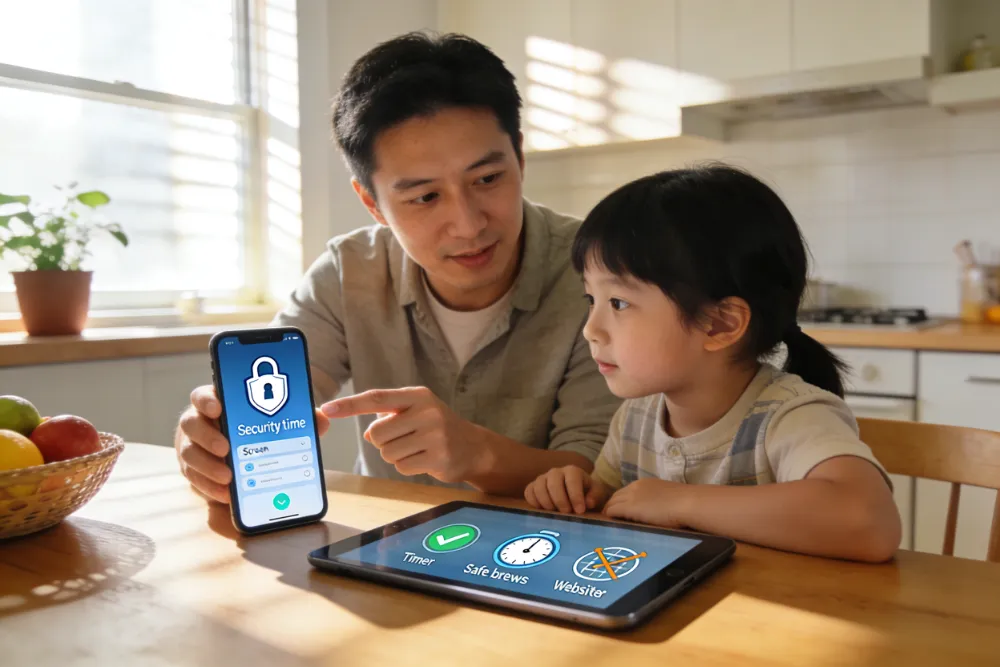
Knowing about these apps is only half the battle. The other half is talking to your child in a way that doesn’t push them to hide things from you.
A few principles we think work well. First, approach the conversation with curiosity, not accusation. “I’ve been reading about some apps and I wanted to understand what you use” lands very differently than “Are you on any of these dangerous apps?”
Second, be specific about risks without being catastrophic. Children tune out if they feel lectured, but they do respond to concrete examples. “There have been cases where adults used that app to contact kids your age” is more effective than “the internet is dangerous.”
Third, involve them in the solution. Asking a teenager to help set up parental controls or choose which apps stay on their phone gives them agency. They’re more likely to follow agreements they helped create.
Practical Tools for Ongoing Digital Safety
Beyond conversations, there are practical tools that can help parents manage Dangerous Apps and reduce online risks for children. Apps like Bark, Qustodio, and Circle monitor activity and flag concerning content without reading every message your child sends. This balance between supervision and privacy tends to work better with older children than fully locked-down monitoring.
Built-in parental controls on iOS and Android have also improved significantly in recent years. Features like Screen Time on iPhone and Google Family Link on Android devices let parents set app limits, block Dangerous Apps, filter content, and review usage without needing a third-party subscription.
No tool replaces the parent-child relationship, though. The families that tend to navigate digital safety best are the ones where children feel comfortable telling a parent when something online made them uncomfortable, without fearing they’ll immediately lose access to their devices entirely.
Conclusion: Staying Informed Is the Best Protection
The app landscape changes fast, and new Dangerous Apps appear every year. The seven apps we’ve covered here represent some of the risks that are most relevant and documented right now, but new platforms will continue to emerge while older ones evolve. What doesn’t change is the underlying pattern of how harm happens online: strangers building trust, content normalizing risky behavior, and platforms that weren’t designed with children’s safety as a priority.
You don’t need to become a tech expert to protect your child from Dangerous Apps and online threats. You simply need to stay curious, keep the lines of communication open, and check in regularly about what they’re using and why they enjoy it. Understanding their digital world from their perspective is one of the most powerful things you can do as a parent.
We hope this guide gives you a clearer picture and some practical steps you can take today. Digital safety isn’t a one-time conversation. It’s an ongoing part of raising kids in a connected world, and you’re already doing the right thing by educating yourself.
Frequently Asked Questions
What are the most dangerous apps for kids in 2026?
Some of the most concerning apps for kids in 2026 include Wizz, Snapchat, Discord, Yubo, Omegle-style chat apps, Roblox, and TikTok. These platforms can expose children to strangers, explicit content, cyberbullying, scams, and online predators.
Why are dangerous apps risky for teenagers?
Dangerous apps often include features like anonymous messaging, disappearing content, location sharing, or unmoderated chat rooms. These features can make it easier for strangers to contact minors or encourage risky online behavior.
How can I tell if my child is using dangerous apps?
Start by checking installed apps on their phone and talking openly about which platforms they use most. Sudden secrecy, excessive screen time, or hidden folders/apps can also be signs worth paying attention to.
Are apps like Roblox and TikTok safe for children?
Apps like Roblox and TikTok are not automatically unsafe, but they do carry risks if parental controls and privacy settings are not properly configured. Monitoring usage and enabling safety features can make these platforms safer for kids.
What should parents do if they find dangerous apps on a child’s phone?
Stay calm and avoid reacting with anger. Have an honest conversation about the risks, review privacy settings together, and decide whether the app should be limited or removed based on your child’s age and maturity level.
What are the best parental control tools for dangerous apps?
Popular parental control tools include Bark, Qustodio, and Google Family Link. These tools can help parents monitor activity, set screen time limits, and block unsafe content.
How often should parents check their child’s apps?
It’s a good idea to review apps, privacy settings, and online activity regularly, especially as new social media trends appear. Monthly check-ins and ongoing conversations usually work better than strict one-time monitoring