



If you have ever looked over at your child and realized they have been staring at a screen for three hours without blinking, you are not alone. Most parents today are navigating this same challenge every single day. Building healthy digital habits for kids is one of the most important parenting conversations of our generation, and it is also one of the most confusing.

Technology is not going anywhere. Our children will grow up using it for school, friendships, creative work, and eventually careers. The goal is not to keep them away from screens entirely. It is to help them build a healthy, balanced relationship with technology, one that serves them rather than controls them.
We put together this guide to give you a clear, practical path forward. Whether your child is five or fifteen, these strategies will help you set the right tone at home.
Why Healthy Digital Habits for Kids Matter More Than Ever
A few decades ago, parents worried about how much television their kids watched. Today, the challenge is far more complex. Children have access to smartphones, tablets, gaming consoles, smart TVs, and laptops, often all at once. Building Healthy Digital Habits for Kids has become one of the biggest priorities for modern families. The average child in the United States now spends more than seven hours a day in front of screens outside of school, according to data from Common Sense Media.

That kind of exposure shapes the brain, particularly in younger children whose habits and thought patterns are still forming. Research from the American Academy of Pediatrics has linked excessive, unstructured screen time to disrupted sleep, reduced attention spans, and fewer face-to-face social interactions. Developing Healthy Digital Habits for Kids early can help families reduce these risks while creating a healthier relationship with technology.
But here is what we also know: technology used thoughtfully can support creativity, curiosity, and learning. The key is balance and intention. That is exactly what Healthy Digital Habits for Kids are designed to create.
What the Research Tells Us
Studies consistently show that children who have clear technology rules at home tend to sleep better, perform better in school, and report higher levels of well-being. Encouraging Healthy Digital Habits for Kids is not about restriction for its own sake. It is about helping kids develop self-regulation skills they will carry into adulthood.
Think of it this way. You would not let your child eat whatever they wanted, whenever they wanted, with no structure. You build good food habits by modeling, guiding, and creating healthy routines. Healthy Digital Habits for Kids work the same way.
| Key Insight: Children do not naturally regulate screen time on their own. Building Healthy Digital Habits for Kids requires adults to model positive behavior, provide guidance, and create structures that make healthy digital choices easy and the default. |
Start With a Family Technology Agreement
One of the most effective first steps you can take toward building Healthy Digital Habits for Kids is creating a shared family agreement around technology use. This is not a list of punishments or restrictions. It is a living document that reflects your family values and gives everyone, including kids, a voice in how technology fits into your home.

Involving children in this process matters. When they help set the rules, they are far more likely to follow them. A study published in Pediatrics found that family media plans created collaboratively lead to better outcomes than top-down rules imposed by parents alone. Creating these conversations early helps families establish Healthy Digital Habits for Kids that feel supportive rather than controlling.
What to Include in Your Family Tech Agreement
- Screen-free zones: Agree on spaces where devices simply do not go. The dinner table, bedrooms, and car rides are great starting points.
- Device-free times: Decide on daily windows when screens are off for everyone, including parents. The hour before bed is especially important for sleep quality.
- Content expectations: Talk openly about what kinds of content are and are not okay, and why. Keep this conversation ongoing as kids grow.
- Charging stations: Establish a central family charging station outside of bedrooms. This one simple habit dramatically reduces late-night scrolling.
- Check-ins over check-ups: Frame conversations about what they are watching or playing as curiosity, not surveillance. “What are you into right now?” goes further than “Let me see your phone.”
| Parent Tip: The American Academy of Pediatrics Family Media Plan Tool offers a free and practical way to support Healthy Digital Habits for Kids. Parents can customize the plan based on their child’s age, with guidance covering everything from screen time limits to content guidelines and device-free routines. |
Age-by-Age Guide to Building Healthy Digital Habits
Children are not all the same, and neither are their digital needs. What works for a seven-year-old will not work for a fourteen-year-old. Here is how to think about building healthy digital habits for kids at every stage.
Helpful resources
Healthy Screen Time Rules for Kids by Age (Toddlers to Teens)
Learn how to create healthy, age-appropriate screen time rules for kids with practical guidance for toddlers, children, and teens. This guide helps parents set balanced digital boundaries that actually work in everyday family life.
Ages 2 to 5: Foundations First
For very young children, the American Academy of Pediatrics recommends limiting screen time to one hour per day of high-quality, educational content. At this age, co-viewing is everything. Sit with your child, ask questions, and connect what they see on screen to the real world around them.
Avoid using screens as a default babysitter, even when it is tempting. Instead, introduce devices as tools for specific, intentional activities like a video call with a grandparent or an educational app session with a clear start and end time.

Ages 6 to 12: Building Structure and Awareness
This is the window where real habits form. Children this age can start to understand why limits exist, not just what the limits are. Explain the reasoning. “We turn off screens an hour before bed because your brain needs time to wind down, and you sleep better when you do.”
Introduce the concept of passive versus active screen time. Watching videos passively is very different from building something in Minecraft or learning to code. Help them see the difference and prioritize active, creative technology use.
- Set consistent screen time schedules rather than negotiating daily.
- Keep gaming sessions to agreed time blocks with a visible timer.
- Encourage them to teach you something they learned from a video or app.
- Review privacy settings on any accounts they use together.
Ages 13 to 18: Coaching Toward Independence
Teenagers need fewer restrictions and more guidance. At this stage, the goal is to help them develop their own internal compass. Talk openly about social media, comparison culture, and the way algorithms are designed to keep them scrolling.
Pew Research Center found that 45 percent of teens say they feel overwhelmed by the drama that plays out on social media. Opening up a conversation about that pressure, without judgment, can be more powerful than any app blocker.
Respect their growing need for privacy while staying engaged. This does not mean ignoring red flags. It means choosing connection over surveillance as your primary strategy.
| Age-Based Screen Time Summary Ages 2-5: Up to 1 hour per day of quality content, always with a parent nearby. Ages 6-12: Consistent daily limits set together, focus on active over passive use. Ages 13+: Shift from rules to conversations, boundaries, and mutual trust. |
Practical Daily Routines That Support Healthy Digital Habits for Kids
Rules are easy to forget. Routines are hard to break. One of the most reliable strategies for raising digitally healthy children is embedding technology boundaries into the rhythm of daily life, so they just become normal.
The Morning Routine
Many families struggle with kids reaching for devices first thing in the morning. We recommend a simple rule: no screens until after breakfast and the morning routine is complete. It does not have to be complicated. The habit of starting the day without a screen sets a positive tone and reduces anxiety.
After-School Balance
Children often need downtime after school before homework or structured activities. A short, time-limited screen break can actually help them decompress. The key word is time-limited. Set a clear end point, use a physical timer if needed, and stick to it consistently.
The Evening Wind-Down
Sleep experts consistently recommend avoiding screens for at least 60 minutes before bed. The blue light emitted by devices suppresses melatonin, the hormone that signals to your brain that it is time to sleep. For children who are already prone to bedtime resistance, this habit can make a significant difference.
Replace that screen time with something analog. Reading, a family board game, drawing, or even a short walk can serve as a genuine wind-down and strengthen family connection at the same time.
Modeling the Behavior You Want to See
Here is the honest truth: our children are watching us. If we preach balance but spend our evenings scrolling through our own phones, the message our kids receive is that screens are actually the most important thing in the room.
Modeling healthy digital habits does not mean you have to become a monk. It means being intentional and visible about your own relationship with technology. Put your phone face-down during dinner. Say out loud that you are taking a screen break. Show them what it looks like to choose a book over a video.
Children are not looking for perfection. They are looking for authenticity. When you make an effort, they notice. And when you slip up and say, “I spent too much time on my phone today, I am going to do better tomorrow,” that models something equally valuable: self-awareness and accountability.
Using Parental Controls as a Support Tool, Not a Replacement for Conversations
Parental controls can be genuinely useful, especially for younger children. Most smartphones, tablets, and gaming consoles offer robust built-in tools that let you manage content, set time limits, and monitor usage. Features like Apple Screen Time and Google Family Link are two solid starting points for parents working to build Healthy Digital Habits for Kids.
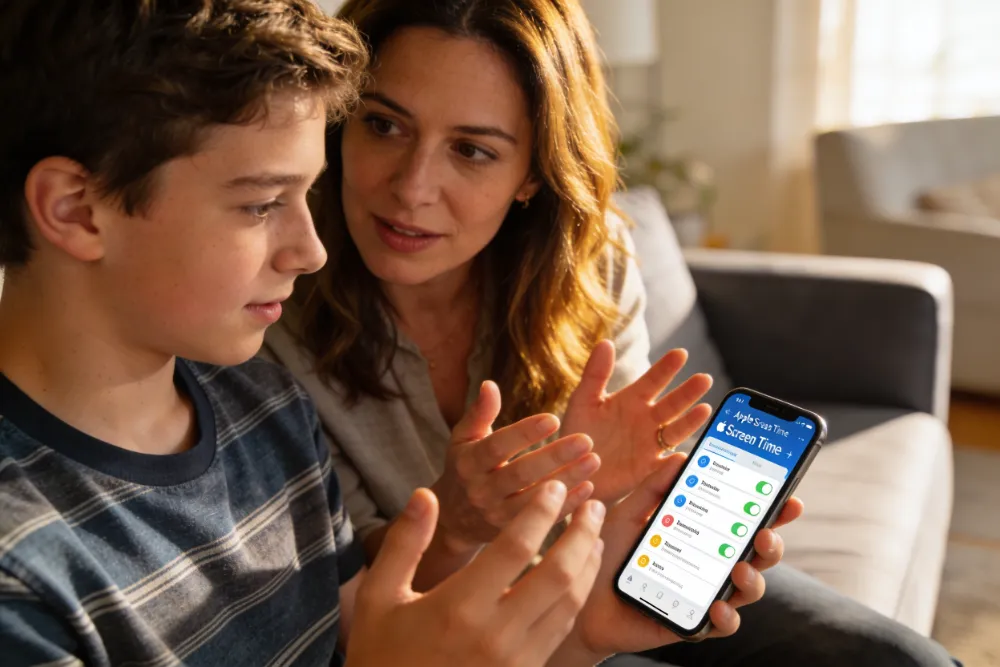
But we want to be clear about something important: parental controls are a safety net, not a complete solution. A determined teenager will often find workarounds. A child who does not understand why limits exist will push back harder as they get older.
The most effective parental controls are conversations. Use the technical tools to support boundaries you have already set together, not to enforce rules that were never explained. Open communication is one of the strongest foundations for creating long-term Healthy Digital Habits for Kids.
| Recommended Tools for Parents to Support Healthy Digital Habits for Kids Apple Screen Time: Built into iPhones and iPads. Parents can manage app limits, apply content filters, and schedule downtime to encourage Healthy Digital Habits for Kids. Google Family Link: Works across Android devices and allows parents to monitor usage, set screen time rules, and approve or block app downloads. Circle Home Plus: A home network-level filtering tool that helps families manage internet access and screen time across all devices connected to Wi-Fi. Common Sense Media: Not a parental control tool, but an invaluable resource for age-based reviews of apps, games, movies, and shows that can help parents make smarter digital choices for their children. |
Helpful resources
Best Parental Control Apps for Kids (Tested by Parents)
Explore the best parental control apps for kids tested by real families, with practical insights on screen time management, online safety, and creating healthier digital habits at home.
When Screen Time Becomes a Problem: Warning Signs to Watch For
Most children will push back on limits, especially at first. That is normal. But there are signs that suggest a child’s relationship with technology has shifted into something that needs more attention.
Signs That May Warrant a Closer Look
- Intense emotional reactions: Meltdowns or severe anxiety when devices are taken away, beyond what seems age-appropriate.
- Sleep disruption: Consistently falling asleep late, waking during the night, or being exhausted in the morning.
- Withdrawal from offline activities: Losing interest in hobbies, sports, or friendships they used to enjoy.
- Secretive behavior: Hiding screens, quickly closing tabs, or becoming defensive when asked about their online activity.
- Declining academic performance: A noticeable drop in grades or engagement with schoolwork.
If you notice several of these signs together, it is worth having a calm, open conversation and potentially reaching out to your child’s pediatrician or a family therapist who specializes in technology use. You are not overreacting by taking it seriously.
Frequently Asked Questions
How many hours of screen time should kids have each day?
There is no single answer that fits every child, but general guidelines from the American Academy of Pediatrics recommend no screen time for children under 18 months except video calls, one hour per day for ages 2 to 5, and consistent but flexible limits for older children. What matters most is not just the quantity but the quality of screen time. An hour of creative, interactive content is very different from an hour of passive scrolling.
What are the most effective healthy digital habits for kids to start building early?
The most impactful habits to establish early include keeping bedrooms screen-free, charging devices outside the bedroom overnight, turning off screens at least one hour before bed, and having regular family conversations about what kids are doing online. These habits create structure without feeling punitive, and they become easier to maintain the earlier you introduce them.
How do I talk to my teenager about healthy digital habits without starting a fight?
Lead with curiosity rather than criticism. Ask what they enjoy about the apps or games they use. Share your own struggles with screen time honestly. When teenagers feel heard and respected, they are far more receptive to conversation. Avoid ultimatums where possible and focus on collaboration. “How do we figure this out together?” opens far more doors than “Put the phone down right now.”
Should I use parental controls to monitor my child’s screen time and online activity?
Parental controls can be a helpful layer of protection, particularly for younger children. But they work best when paired with open communication. Use them to support limits you have set together, and be transparent with your child about what you are monitoring and why. As children grow and demonstrate responsibility, gradually stepping back on controls builds the kind of trust that keeps communication open during the teenage years.
How do I build healthy digital habits for kids when screens are required for school?
This is a genuinely tricky balance, and many parents are navigating it. The key is to distinguish between educational screen time and recreational screen time. Create a dedicated, device-free wind-down period after school is done, keep homework devices out of the bedroom, and encourage your child to take short offline breaks during long study sessions. The goal is not to eliminate necessary screen use but to keep it purposeful and bounded.
Final Thoughts
Building healthy digital habits for kids is not about getting everything right from day one. It is a process. It will involve trial and error, some pushback, and plenty of course corrections along the way.
What matters most is that you are engaged, that you keep the conversation open, and that your children see technology as one part of a rich, full life rather than the center of it. You do not have to be a tech expert to do this. You just have to be present, consistent, and willing to keep learning alongside your kids.
Start small. Pick one habit from this guide and introduce it this week. See how it goes. Then add another. Small, consistent steps are what create lasting change in any family.
You have already taken the first one by being here.