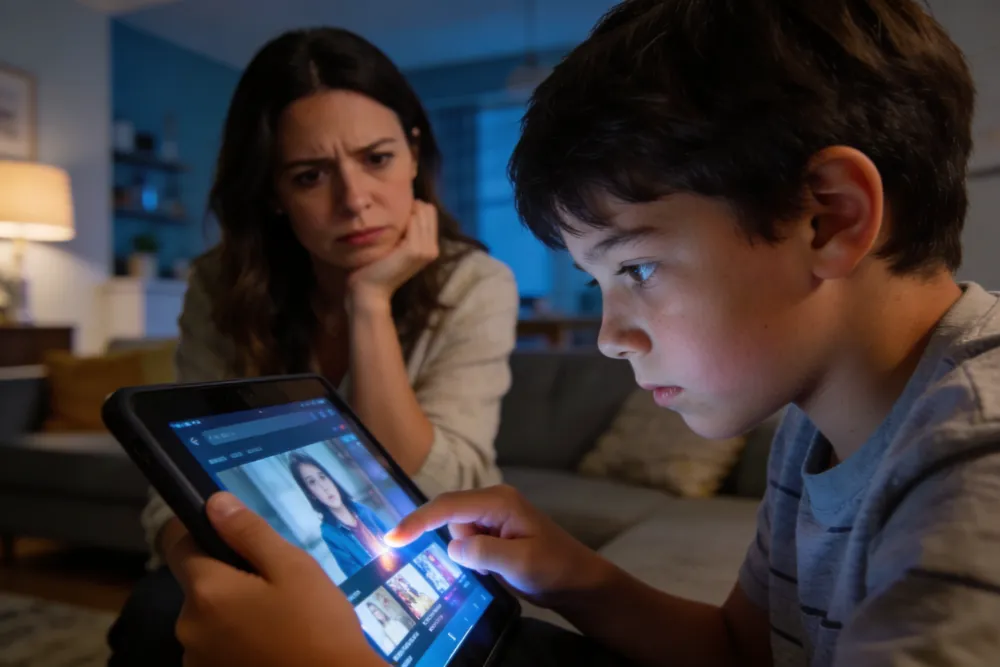



If you have ever found yourself wondering whether your child is spending too much time on screens, you are not alone. Setting screen time rules for kids is one of the most common challenges parents face today. With tablets, smartphones, gaming consoles, and streaming services all competing for our children’s attention, it can feel genuinely difficult to know where to draw the line.
The good news is that researchers and pediatric health experts have given us a solid foundation to work from when it comes to Screen Time Rules for Kids. We do not have to guess. In this guide, we walk you through age-appropriate screen time guidelines, explain the reasoning behind them, and give you practical tools to make these rules work in real family life.

Why Screen Time Rules for Kids Actually Matter
Before we get into the numbers, it helps to understand why Screen Time Rules for Kids matter in the first place. Screens are not inherently bad. Educational videos, video calls with grandparents, and thoughtfully designed games can all support children’s learning and relationships. The concern is not really about screens themselves. It is about what gets crowded out when screen time grows unchecked.
Children who spend excessive time on devices often get less physical activity, sleep fewer hours, and have fewer face-to-face conversations with family and peers. These are the building blocks of healthy development, and when they are consistently missing, we start to see downstream effects on mood, attention, and even school performance. This is exactly why healthy Screen Time Rules for Kids are so important for modern families.
The American Academy of Pediatrics (AAP) has published screen time guidelines that reflect years of research into child development. We reference these throughout this article because they are the most widely recognized and evidence-based framework available to parents trying to create balanced Screen Time Rules for Kids.
Screen Time Guidelines by Age at a Glance
Here is a quick overview of the recommended daily screen time limits, organized by age group. We cover each stage in detail below.
| Age Group | Recommended Limit | Key Guidance |
| Under 18 months | Video chat only | No solo screen time; video calls with family are fine |
| 18-24 months | Minimal, with parent | High-quality programming only, always co-viewed |
| 2-5 years | 1 hour/day | Parent-selected content; discuss what you watch together |
| 6-12 years | 1-2 hours/day | Balance with homework, play, sleep, and family time |
| 13-17 years | 2-3 hours non-school | Focus on content quality and healthy habits over strict limits |
These figures represent recreational screen time outside of schoolwork and video calls with family. We will explain what counts and what does not as we go.
Screen Time for Babies and Toddlers Under 2 Years

This is the age group where the research is most definitive. The AAP recommends avoiding screen use for children younger than 18 months, with the single exception of video chatting. Seeing a grandparent’s face on a screen is a shared social experience, and that is meaningfully different from a toddler watching a cartoon alone.
Between 18 and 24 months, some high-quality programming can be introduced, but only if a parent or caregiver watches alongside. The reason is simple: children this young cannot learn much from screens on their own. They need a caring adult to help them connect what they see on screen to the real world around them.
Why This Age Range Needs Extra Care
The first two years of life are a period of extraordinary brain development. Children are learning language, forming attachments, and building the neural pathways that will underpin everything they learn for the rest of their lives. Passive screen exposure can displace the kind of rich, responsive interaction that actually drives this development.
If your 18-month-old is drawn to your phone or tablet, that is perfectly normal curiosity. Redirecting them to books, play, or outdoor exploration is always the better option at this stage.
| What You Can Do – Keep TVs off in rooms where babies and toddlers play, even as background noise – Choose video calls over passive video viewing whenever possible – If introducing content at 18-24 months, use programs designed for this age group and always co-watch – Make sure caregivers and family members know about these limits too |
Screen Time Rules for Kids Ages 2 to 5
For preschoolers, the AAP recommends no more than one hour of screen time per day as part of healthy Screen Time Rules for Kids. That one hour should consist of high-quality, age-appropriate content, and whenever possible, parents should watch together and talk about what they see.
This age group is at a fascinating stage of development. Children are absorbing language, social norms, and emotional concepts at a remarkable pace. Good programming can actually support these areas, but only when it is carefully chosen and not used as a digital babysitter for hours at a stretch.
What Counts as High-Quality Content?
Look for programs that are slow-paced, interactive, and focused on language, problem-solving, or social-emotional skills. Common Sense Media is an excellent free resource that rates content by age appropriateness. Educational series designed specifically for this age group tend to use repetition, clear narration, and age-appropriate scenarios.
Fast-paced content with lots of scene changes and sound effects is harder for young brains to process and has been linked to attention difficulties in some research. Slower, narrative-driven content is generally the better choice.
Making Screen Time a Shared Experience

One of the most effective ways to apply healthy Screen Time Rules for Kids at this age is to sit with your child and watch together. Ask them questions. Point things out. Make connections to their real life. “Look, the dog on the show is scared of thunder. Do you remember when our dog hid under the bed during the storm?” This kind of co-viewing turns passive screen time into active learning.
| What You Can Do – Use a simple visual timer so your child knows when screen time is ending – Build screen time into the routine at the same time each day to reduce negotiation – Preview content before your child watches it whenever you can – Use Common Sense Media to check age ratings and parent reviews – Transition away from screens with a physical activity, not just turning them off abruptly |
Screen Time Guidelines for School-Age Children (Ages 6 to 12)
For this age group, the conversation shifts slightly. The AAP does not give a single hard number the way it does for younger children. Instead, the guidance is to ensure screen time does not interfere with adequate sleep, physical activity, homework, and in-person socializing. A general working range that many pediatricians suggest is one to two hours of recreational screen time per day outside of schoolwork.
School-age children are more independent than toddlers, which means they can use devices alone, they encounter more varied content, and they may start using social platforms or multiplayer games that introduce peer dynamics you cannot fully control.
Helpful resources
Best Parental Control Apps for Kids (Tested by Parents)
Discover the best parental control apps parents actually use to manage screen time, filter content, and keep kids safer online.
Balancing Homework, Hobbies, and Devices
At this stage, screens are often used for both learning and entertainment. It helps to create a clear boundary between the two. Many families use a “homework first” rule, where recreational screen time only begins after assignments are done. This also builds a useful habit for the teen years ahead.
Physical activity is especially important here. Kids aged 6 to 12 should be getting at least 60 minutes of moderate to vigorous physical activity daily, according to the CDC. If screen time is consistently crowding out outdoor play or after-school sports, that is a signal to reassess the balance.
Gaming, YouTube, and the Content Question
Gaming and YouTube are the two biggest areas of concern for parents of school-age kids. Both can have real value but both also carry risks. Multiplayer games can involve in-game chat with strangers, and YouTube’s recommendation algorithm can lead children down unexpected content paths.
We recommend enabling parental controls on gaming platforms and using YouTube Kids rather than the main YouTube app for children under 12. These are not perfect solutions, but they meaningfully reduce exposure to inappropriate content.
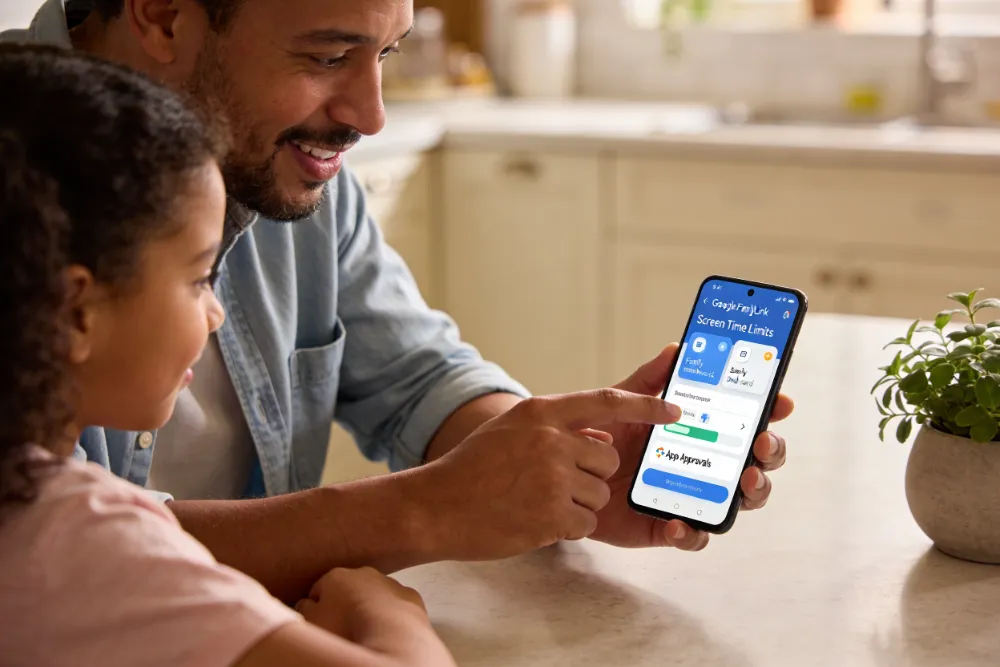
| What You Can Do – Set a consistent daily limit using your device’s built-in screen time tools or an app like Google Family Link – Create a “device-free” zone in bedrooms, especially at bedtime – Use YouTube Kids instead of the main app for under-12s – Have regular conversations about what your child is watching and playing – Involve your child in setting the rules so they feel heard and are more likely to follow them |
Screen Time Rules for Teenagers (Ages 13 to 17)
Teens are a different conversation entirely. By adolescence, rigid screen time rules for kids often do more harm than good if they come across as arbitrary or disconnected from the real reasons behind them. At the same time, teen screen use is arguably the most consequential of any age group, especially when it comes to social media and sleep.
A 2023 Pew Research Center survey found that about 95 percent of U.S. teens say they use a smartphone, and roughly half say they are online “almost constantly.” This is the reality parents are working with. The goal is not to fight technology, but to help teens develop a healthy, self-aware relationship with it.
Helpful resources
Healthy Digital Habits for Kids: A Practical Guide for Parents
Learn simple, practical ways to help your child build healthier screen habits and create a better balance between technology and real life.
The Sleep Connection
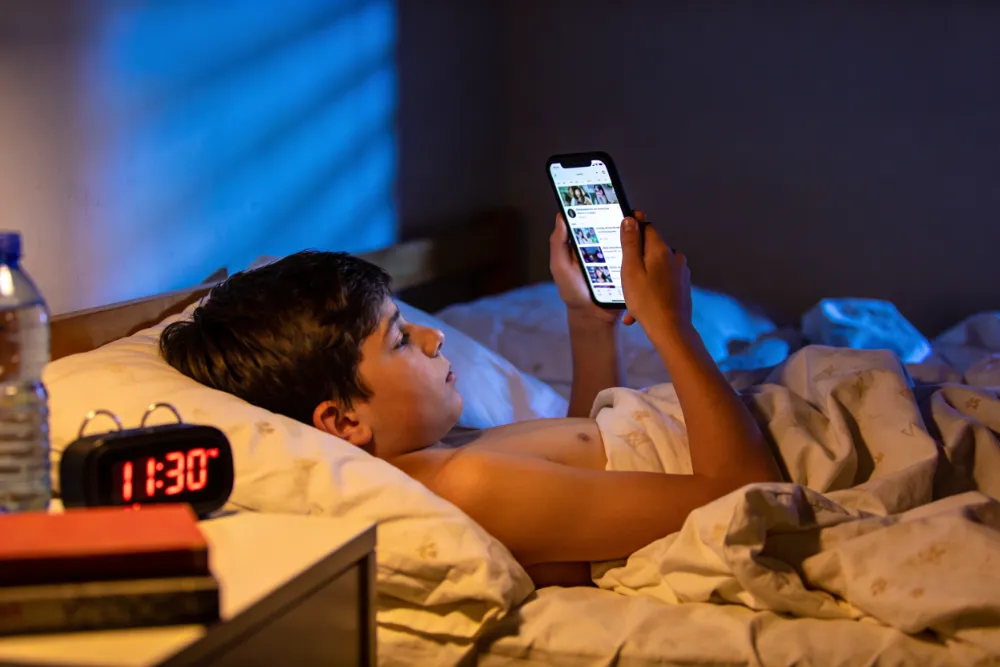
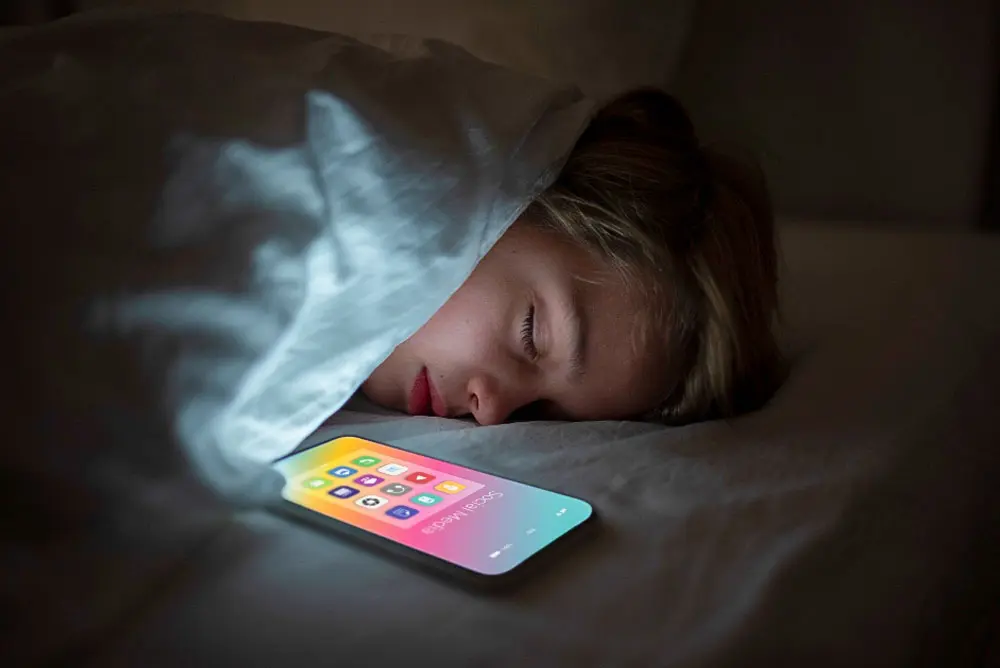
Research consistently shows that teenagers who use devices in the hour before bed sleep less and sleep more poorly. The blue light from screens can suppress melatonin production, and the psychological stimulation of social media or gaming keeps the brain alert when it needs to be winding down.
Many experts suggest a “tech curfew” of 30 to 60 minutes before bed as the single most impactful screen time intervention for teens. Keeping phones out of bedrooms overnight is even more effective.
Social Media and Teen Wellbeing
Social media use is associated with higher rates of anxiety and low self-esteem in some adolescents, particularly teenage girls. This does not mean every teenager who uses Instagram will experience mental health difficulties. However, if you notice changes in mood, withdrawal from in-person friendships, or an unusual preoccupation with how content is performing, those are signs worth taking seriously.
Open, judgment-free conversations tend to work far better than bans for this age group. When teens feel they can talk to you about what they see and experience online, they are more likely to come to you when something goes wrong.
Moving Toward Independence
The teenage years are about gradually handing over responsibility. Rather than enforcing screen time limits externally, the goal should be to help teens develop their own judgment. This might mean creating a family media agreement together, teaching them about the design patterns platforms use to keep users hooked, or simply modeling healthy device habits yourself.
| What You Can Do – Set a no-phones rule at the dinner table and in bedrooms overnight – Discuss the business model of social media apps openly, knowing that engagement is by design – Use built-in tools like Apple Screen Time or Android Digital Wellbeing to set app limits teens can see – Create a family media plan using the tool at healthychildren – Be curious rather than judgmental when asking about your teen’s online life |
Building a Screen Time Agreement That Works for Your Family
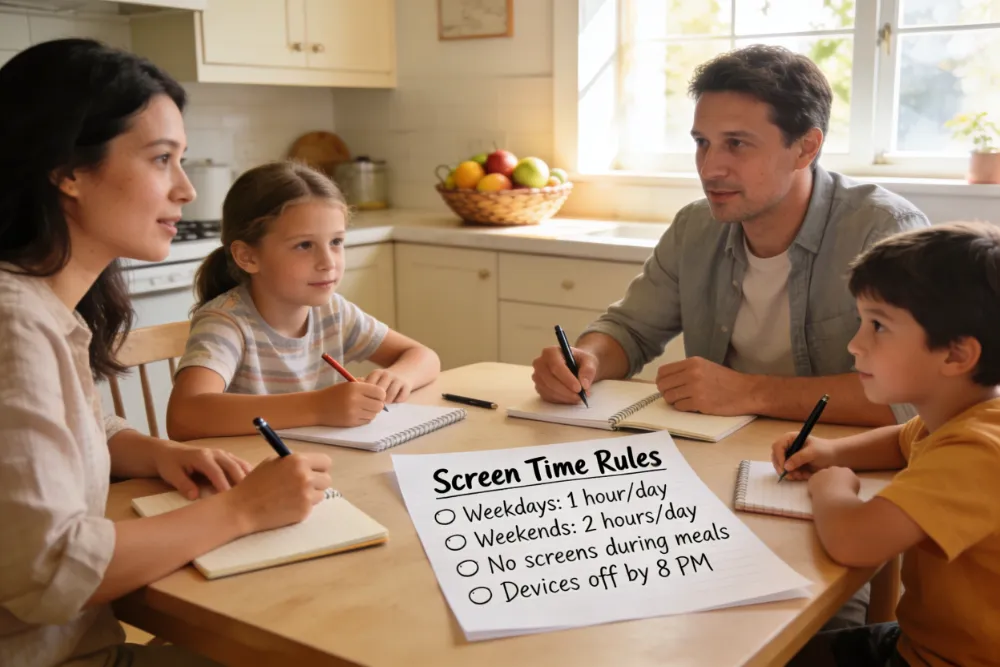
Rules work best when everyone understands them and had some say in creating them. A written family media agreement is a practical way to get everyone on the same page. It does not need to be formal or complicated. A simple list of agreed-upon rules posted on the fridge can be genuinely effective.
Key elements to include are daily time limits for each family member, no-screen zones and times (meals, bedrooms, car rides), what types of content are acceptable, and a plan for what happens when the rules are broken. Revisit the agreement every few months as your children grow and their needs change.
The American Academy of Pediatrics offers a free, customizable Family Media Plan at healthychildren.org that walks you through each of these decisions step by step. We strongly recommend using it as a starting point.
Frequently Asked Questions
What are the recommended screen time rules for kids under 5?
The American Academy of Pediatrics recommends no screen time for children under 18 months, except for video chatting with family. From 18 to 24 months, a small amount of high-quality content is acceptable, but only when a parent watches alongside as part of healthy Screen Time Rules for Kids. For children aged 2 to 5, the limit is one hour per day of carefully chosen programming. The goal at this age is not just limiting time, it is protecting the hands-on play and conversation that young brains need most.
How much screen time is too much for a school-age child?
For children between 6 and 12, most pediatricians suggest no more than one to two hours of recreational screen time on school days. The more useful measure is whether screens are crowding out sleep, physical activity, homework, or in-person time with family and friends. If your child is consistently irritable when devices are taken away, struggling to focus, or skipping physical activity to stay on screens, those are clearer warning signs than the clock alone.
Should teenagers have screen time limits?
Yes, but the approach shifts with age. Rigid time limits become harder to enforce and less effective for teens. With older children, Screen Time Rules for Kids should focus more on when and how screens are used, not just for how long. Research consistently links late-night device use to poor sleep, which affects mood, focus, and school performance. A no-phone rule in bedrooms overnight and open conversations about social media habits tend to have more lasting impact than a strict daily minute count.
How do I get my child to follow screen time rules without a fight?
Consistency and involvement are the two biggest factors. Children are far more likely to respect rules they helped create. Sit down together and agree on limits, no-screen zones, and what happens when the rules are broken. Using device-level tools like Apple Screen Time or Google Family Link removes you from the role of enforcer, so the limit feels less personal. A simple visual timer works well for younger children. The goal is structure, not punishment.
Does educational screen time count toward the daily limit?
Generally, the standard guidelines for Screen Time Rules for Kids focus on recreational screen time. Homework, video calls with family, and genuinely interactive learning tools are usually treated separately. That said, “educational” is not a free pass. A lot of content marketed as educational for young children offers little more than passive entertainment. The quality of the content matters more than the label on the box. If your child is engaged, interacting, and a parent is present to discuss what they are watching, that is a meaningfully different experience.
What is the best way to limit screen time for kids without constant arguments?
Build limits into the daily routine rather than enforcing them case by case. One of the best ways to maintain healthy Screen Time Rules for Kids is to make screen use predictable. When screen time happens at a predictable time and ends at a predictable time, children stop negotiating because the pattern is simply how things work. A consistent after-school routine, a “homework and outdoor time first” rule, and a shared family agreement posted somewhere visible all reduce the back-and-forth. The families who argue least about screens are usually the ones who decided the rules together in a calm moment, not in the middle of a conflict.
Can too much screen time affect my child’s sleep?
Yes, and the research here is very consistent. The blue light emitted by screens can suppress melatonin production, which delays the onset of sleep. Beyond the light itself, stimulating content, whether gaming, social media, or fast-paced videos, keeps the brain in an alert state when it should be winding down. For children of all ages, most experts recommend stopping screen use 30 to 60 minutes before bed. For teenagers especially, keeping phones out of bedrooms overnight is one of the most impactful changes a family can make.
At what age should a child get their own phone, and how does screen time factor in?
There is no universal right age, but most child development experts suggest waiting until at least middle school, typically around 11 to 13. More important than the age is whether your child understands the responsibilities that come with it. Before handing over a phone, it helps to establish clear expectations around Screen Time Rules for Kids, app access, and where the phone lives overnight. Starting with a basic device or a restricted smartphone with parental controls in place is a practical way to introduce independence gradually.
Our Final Thoughts
Navigating screen time rules for kids is not about perfection. It is about intention. Every family is different, and what works beautifully for one household may not translate directly to another. What matters is that you are thinking about this, having conversations about it, and adjusting as your children grow.
The research gives us clear guardrails for the youngest children and useful frameworks for older ones. But the most protective factor at any age is a strong, open relationship between parent and child. When kids know they can come to you with what they see and experience online, the specific number of hours matters a little less.
Start with one change this week. Maybe it is a no-phones-at-dinner rule, or downloading Google Family Link, or simply sitting down to watch something with your child and talking about it afterward. Small, consistent steps add up to real change.